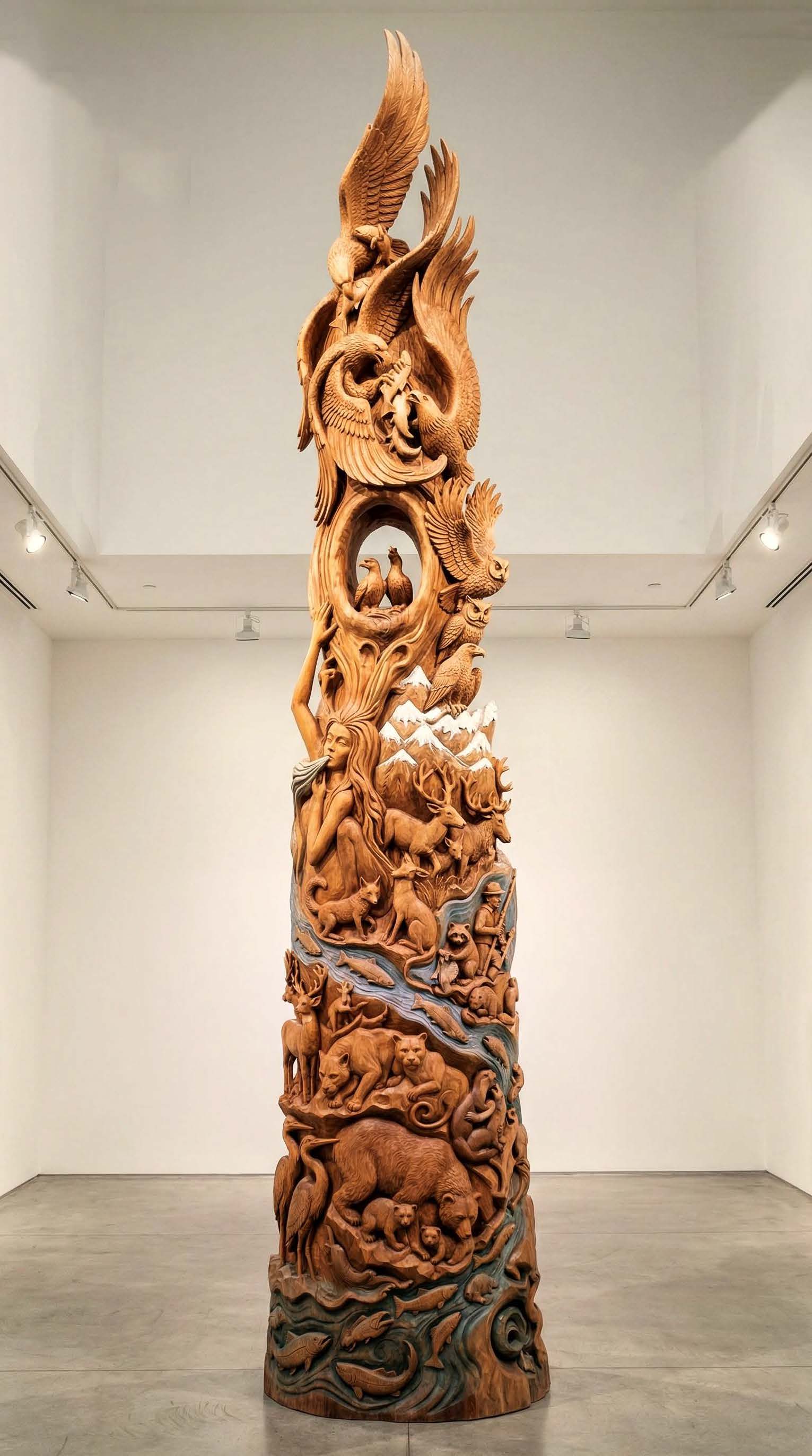
For more than fifty‑five years, sculptor J. Chester Armstrong has lived and worked in Sisters, Oregon, carving forms that emerge from the same landscapes that inspire them. His work is deeply rooted in the ecology, wildlife, and cultural history of Central Oregon—particularly the rivers that define and sustain the region. The Deschutes, Metolius, and Crooked Rivers carry cold water from the Three Sisters Wilderness and link the high desert to the Columbia River Basin, returning salmon and steelhead from the sea. Their annual migration feeds forests, nurtures wildlife, shapes human communities, and remains central to Indigenous histories and living traditions.
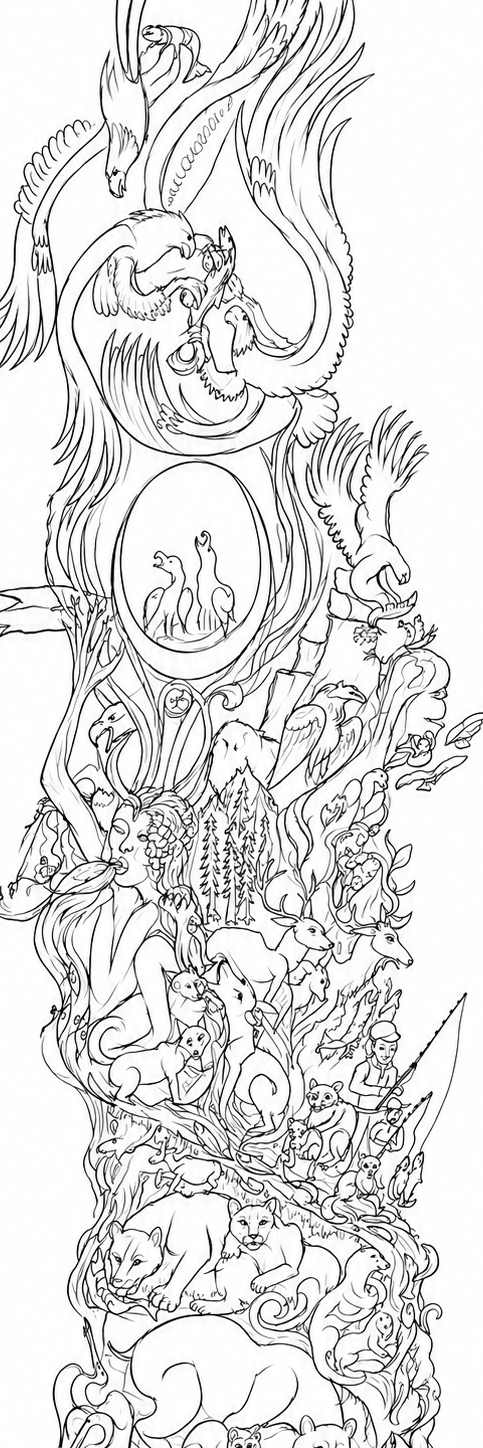
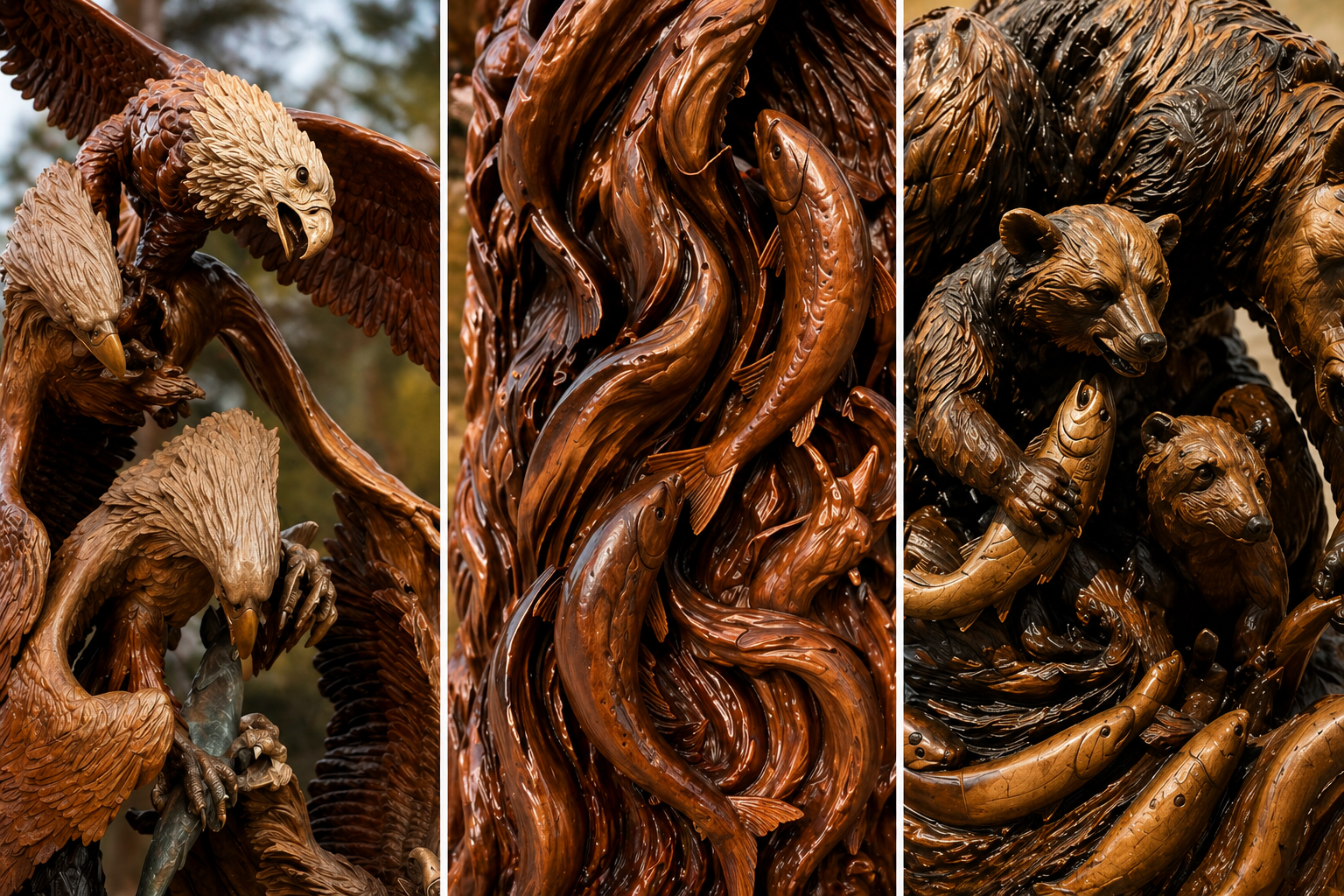
Armstrong describes this process as a conversation between artist, material, and place, reflecting the way rivers themselves carved the surrounding landscape over time. The resulting work serves as a contemporary story pole, a vertical, tapering column designed to be walked around and discovered from every angle. Layers of fish, birds, animals, and human figures flow together, creating a living narrative of movement, resilience, and interconnection.
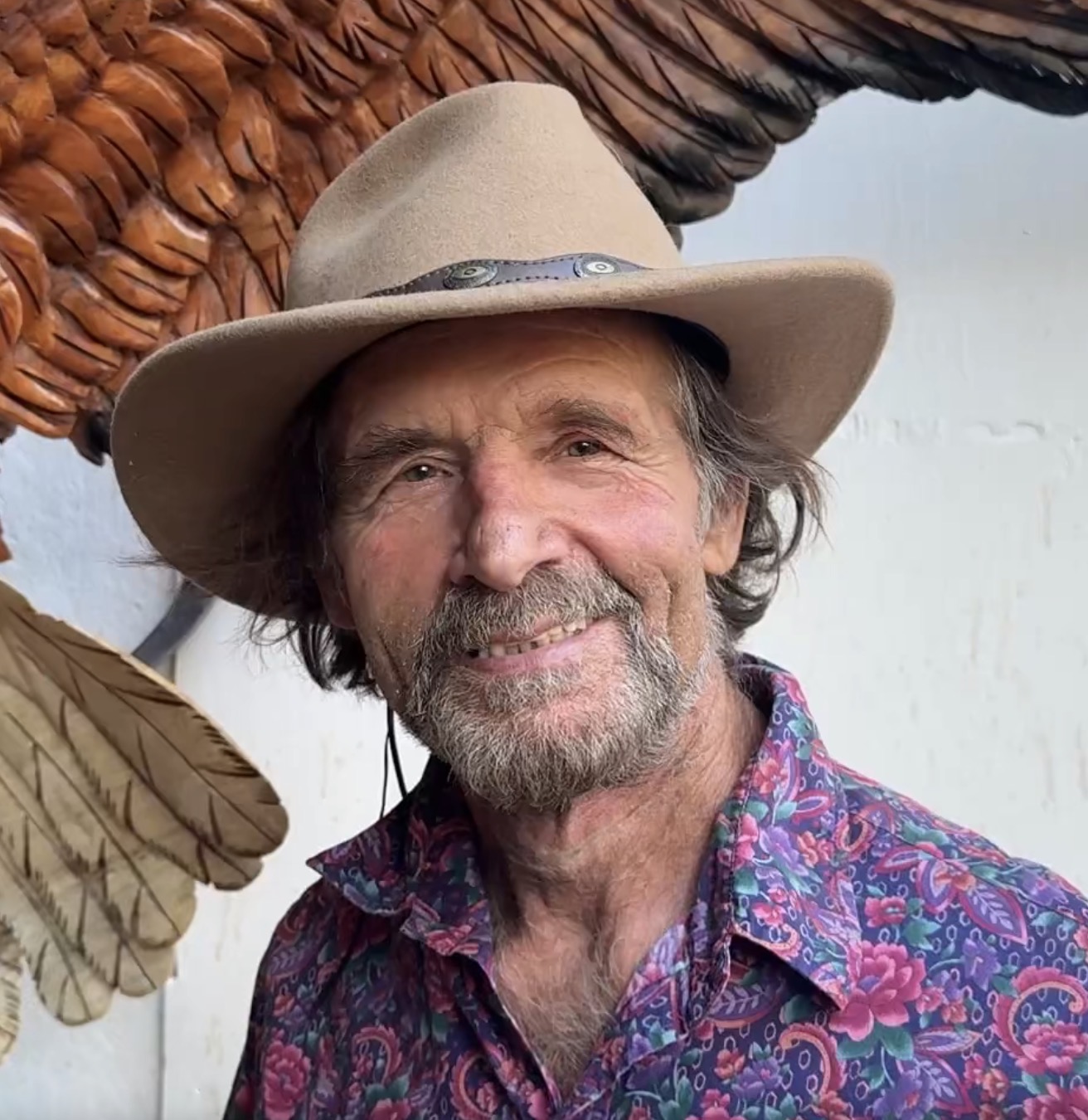
“It is a great honor to contribute to the Redmond Airport expansion and welcome visitors through art that reflects the soul of Central Oregon. This piece is rooted in the landscape itself, utilizing a local Ponderosa pine to express the enduring connection between the land, its wildlife, its communities, and all who are fortunate enough to experience this extraordinary region.“
With a career spanning more than five decades, Armstrong is known internationally for dynamic wildlife forms that express rhythm and energy rather than literal representation. His sculptures honor the spirit of the high desert while acknowledging the histories and ecologies that continue to shape it. Through this work, he invites viewers to reflect on the simple but profound truth that everything in Central Oregon begins with water—and with the return of the salmon.
Artist Voices
Audio & video content coming soon!